Good Deed in a Naughty World

Donizetti-LUCIA DI LAMMERMOOR: Lisette Oropesa, Irene Savignano; Stefan Pop, Mattia Olivieri, Riccardo Zanellato, Dean Power, Didier Pieri/Chorus & Orchestra of the Teatro Massimo Bellini di Catania/Fabrizio Maria Carminati, cond.; Euroarts 2011175 (2 SACDs)
First, the good news. This is the best recording of Gaetano Donizetti’s Lucia di Lammermoor in 40 years. The bad news? That’s not nearly the compliment it should be. Lisette Oropesa’s few moments as Mater Gloriosa were the lone bright spot in Yannick Nezet-Seguin’s unpardonably dreary recording of the Mahler Eighth Symphony. Here, she is—as clearly intended—the primary asset of this new SACD Lucia. And she’s almost the only one.
Mind you, what we are hearing here is not Urtext Lucia but that to which we have become accustomed: Lucia after the manner of Donizetti. Customary opera house practice is to transpose the heroine’s two big arias, as well as her duet with Enrico Ashton, down a tone, and to inflict bushwhacking cuts on the score. Half of Act II, Scene 1 often goes by the boards, as does all of Act III, Scene 1—including a duet that is clearly Donizetti’s response to Bellini’s “Suoni la tromba” from earlier in 1835. What results is a heavily abridged, herky-jerky drama that reflects the disdain with which bel canto opera is still regarded.
Euroarts presents Lucia uncut but with all the usual transpositions in place. One innovation of interest involves the cadenza of the Mad Scene. Most records have employed a cadenza credited to Mathilde Marchesi, probably written for Nellie Melba’s 1889 Parisian performances. Ms. Oropesa has composed her own cadenza, one which showcases her voice flatteringly and provides a viable alternative for other Lucias. It’s certainly an improvement on Cheryl Studer’s bizarre, 1991 cadenza, an elongated sideshow that is essentially “Great Moments from Lucia.”
Before purists raise their hackles, I would draw their attention to Carol J. Money’s research on Lucia. It makes a convincing case that a “definitive Lucia” was always a moving target and that Donizetti regarded it as a living text, subject to modification from one performance to the next. What Euroarts has given us is sort of a ‘standard-modern’ text, as opposed to the efforts to resurrect an Urtext done by Jésus Lopez-Cobos and Sir Charles Mackerras. (See Appendix.)
(A digression: For purposes of discussing the Oropesa set—and maintaining my sanity—I have confined this discussion to recordings which are essentially complete and in Italian, free of the nonsensical cutting often inflicted upon Donizetti’s score. This puts the otherwise estimable efforts of such fine ladies as Mercedes Capsir, Lina Pagliughi, Lily Pons, Renata Scotto and Maria Meneghini Callas out of bounds. In the case of Mme. Meneghini, there are two studio recordings and no fewer than six broadcasts extant, enough to warrant a monograph in and of themselves! Also excluded were recordings in English [Elizabeth Futral] or of the very different Lucie de Lammermoor [Patrizia Ciofi, Natalie Dessay], along with sundry others because, well, life’s too short.)
One’s first reaction to the Euroarts Lucia is that performance standards in the score’s native Italy are sagging perilously. The watery-toned horns and raw-sounding chorus immediately bode ill. Dean Power’s Normanno, though, discloses a capable lyric-tenor voice and excellent delivery. Mattia Olivieri’s Enrico responds with raw, blustery vigor and brazen reliance on his high G. When he returns during the Mad Scene, this Enrico seems only mildly disturbed by the dire event. Overall, his instincts are crude ones and he labors through divisions.
Riccardo Zanellato has a true bass voice, for a refreshing change, and a paternal manner but his sound shudders and it peters out in the deep descent to “la tremenda maesta” in the Wedding Scene. Zanellatto deserves kudos, though, for decorating the cabaletta reprise in his oft-cut duet with Lucia. Alisa is an aged scold, albeit one with firm tones, while the Arturo is tremulous and careful. (The role, though brief, is very difficult.)
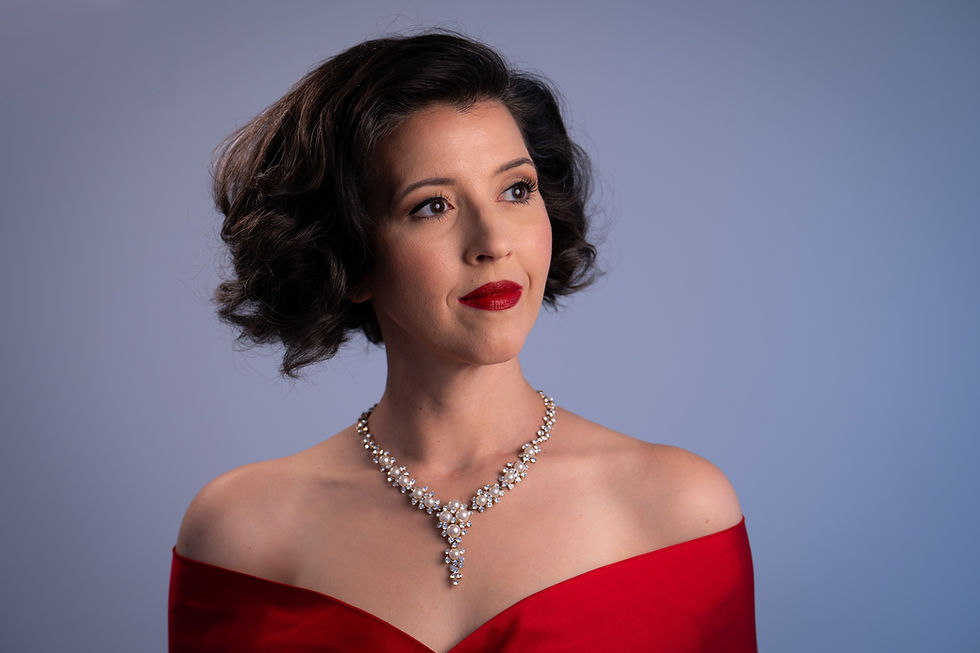
No longer waiting in the wings, Oropesa shows an immediately appealing persona, her voice full of morbidezza and pleasant tone quality. It’s a resinous sound, very much “on the breath” (as it should be), employed in phrasing that is that of a finished artist. She’s a mite tremulous on her lowest notes, even hollow. Oropesa has clearly been sneaking some aural peeks at Maria Callas, with whom she shares a dollop of tonal bitterness.
Although some recent Lucias have tried to steer the role away from coloratura, Oropesa is thankfully not of that lineage. She trills splendidly and sounds her divisions cleanly, in the manner of Edita Gruberova, Beverly Sills or Dame Joan Sutherland. She owns the interpretive sinew to stand her ground against Enrico in “Il pallor funesto, orrendo” and deliver some impressively long runs as well. Where Olivieri is carelessly loud in the Sextet, Oropesa draws its top line firmly.
Come the Mad Scene and Oropesa is paired with a poker-faced flute soloist, so she must bring all the expression—and does. She’s also guilty of some ungainly downward dismounts, but she’s generally dignified, cleanly sounding the turns and 16th notes that adorn Lucia’s music. There’s also very touching “face” to her deliveries of “Ecco il ministro!” and “Alfin son tua.” “Spargi d’amaro pianto” is a fitting capstone to Oropesa’s achievement, elaborately decorated in its reprise and signing off with an extended E-flat.

Oropesa has a worthy partner in Stefan Pop’s Edgardo. His is a meaty, manly voice, used with palpable involvement. He also deploys a lovely mezza voce to launch his half of “Verrano a te.” Pop’s interruption of the Wedding Scene brings the best voce terribile this side of Placido Domingo and he curses Lucia with true fire. In the Wolf’s Crag scene (III/1), he bemoans his fate heroically and matches up well with Olivieri.
Pop’s Tomb Scene is characterized by a plangent opening recitative and “Far poco a te ricovero.” Even the rheumatic orchestral horns don’t seem to daunt him. Pop offers urgent responses to Lucia’s fate but makes rather a meal of “Tu che a Dio.” Still, one wants to hear more from him … and soon.
The conducting of Fabrizio Maria Carminati is a catalogue of carelessness. The sort of bandmaster whose inclination is to follow the singers, he is fond of unmarked tempo articulations and rather cavalier with regard to dynamic markings. The Catania orchestra is provincial, its ensemble dubious, its chording spongy. The harp soloist in Act I is thoroughly charmless, even brutal.
I could reprise my notes in detail—a depressing task—but suffice it to say that Carminati generally tends to lumber and plod where fleetness of foot is needed, undershooting Donizetti’s tempo markings. Lucia may not be thought of as a conductor’s opera but Richard Bonynge, Thomas Schippers and Charles Mackerras have also shown what can be done with it when the orchestral contribution is treated as an equal partner in the drama.
So where does this leave us? Oropesa and Pop are worth hearing, to be sure, but the rest of Euroarts’ principals fall down on the job. This is about as good of a Lucia as one can expect in 2026 and that’s not an encouraging thought. Older recordings still present a formidable hurdle to clear. Comparisons to Dame Joan are invidious: As Conrad L. Osborne noted recently, she was without precedent or successor. Oropesa herself stacks up well next to Beverly Sills, Anna Moffo or to Gruberova. But to be one’s desert-island Lucia, the Euroarts set is a non-starter.
Which Lucia(s) should one collect? If you have the Sitzfleisch, herewith are my observations on 11(!) rival versions. After that, you pays your money and takes your choice. If ordered to choose only one Lucia to take with me into exile, my choice would probably fall upon Sills/Schippers, but several other versions offer plausible alternatives—while several others decidedly do not. Read on …

Joan Sutherland I: This is a not-quite-complete recording. All the numbers are finally present but nine internal tucks are taken along the way. John Pritchard opts for an easygoing pace that—along with some spread and often crass chording from the orchestra—makes Donizetti’s phrases sound squarer than they should. He also abets his leading lady’s more larmoyante tendencies.
Cesare Siepi’s is the finest Raimondo instrument since Ezio Pinza’s but he naps through on autopilot. Another magnificent sound is that of Robert Merrill and, although he hated the role of Enrico, he makes a conscientious effort. The liquid, Italianate tone quality of Renato Cioni is welcome but, next to Joan Sutherland, he is a boy sent to do a man’s job.
Sutherland still thrills as she did in 1961, combining dramatic soprano power with pinpoint accuracy and effortless agility—a battleship performing pirouettes. Her dramatic engagement is not the utmost but she gives a sympathetic characterization nonetheless, and it seems almost churlish to demand more. (Decca)

Anna Moffo: Were it not for Sutherland, Anna Moffo might be counted a virtuoso. She’s an involved, damsel-in-distress Lucia, sung in that highly recognizable, chinchilla-fur tone, and she executes distinctive ornamentation in “Quando rapito.” But her approach is that of a sapper, gripping notes from below and, compared to the Australian’s, her trill is vestigial. But in the Mad Scene, her rapid-fire staccati outdo the solo flute’s.
Georges Pretre conducts rather self-consciously, as though concerned that this cast is not going to make Lucia happen—not a problem, given these singers. Still, Pretre elucidates much that is valuable in the score. Carlo Bergonzi brings the best Italian-tenor voice and style since World War II, although he addresses his Lucia like a public meeting.
Giving a master class in bel canto recitative, Mario Sereni is one of the finest Enricos, perhaps the very best. Rich-voiced Ezio Flagello handily outpoints Siepi—even if he tends to hang back of Pretre’s beat. On the debit side of the ledger, Pierre Duval strangulates on the difficult role of Arturo, and the CD transfer is often coarse and overloaded. (RCA)

Beverly Sills: There is no middle ground on this recording. Either you love it or hate it. Charles Osborne dismissed it as “Hamlet without the prince.” The plangent, palpitating voice of Beverly Sills is unique—as is her coloratura ability. The most expressively specific of post-1960 Lucias, Sills is also the most virtuosic of any. Abetted by Roland Gagnon’s adventurous ornamentations, she embroiders Donizetti’s lines liberally and idiomatically. But, as her Mad Scene attests, Sills can also sing with heartbreaking simplicity. For me, this is the most fully imagined Lucia on records and leaves most of her rivals at the post.
Every bit the Byronic hero, Carlo Bergonzi sings more intimately than he did with Moffo and no less beautifully. Piero Cappuccilli’s open-toned, imperious Ashton brooks no disagreement and could squash almost any Lucia like a bug. (Both these gentlemen, it must be admitted, sometimes have to simplify their writing.) Justino Diaz is a severe, black-voiced Raimondo and Patricia Kern the most apt of Alisas. The chorus makes a lusty contribution.
Thomas Schippers finds Beethovenian gravitas and scale in Donizetti’s score. All other Lucia conductors sound slightly lightweight in comparison. He judges the tricky double climax of the Sextet perfectly … but isn’t above garnishing the final chords of the opera with cymbal strokes. Osian Ellis makes the harp cadenza in Act I a highlight. The sonics are vivid and fresh. This available digitally from Westminster or on CD from Urania, a label with a spotty track record. (Westminster/Urania)

Joan Sutherland II: Were it not for Sills, this would lap the field. Admittedly, Sutherland is one of the more self-possessed Lucias you will hear. But she has tightened up her lax tendencies from before and still sings with affecting femininity. Her trills are as good as those of Sills, too. You’ll never hear a better-voiced Lucia. The most ardent of Edgardos, Luciano Pavarotti is at his considerable best. (Even Bergonzi and Kraus sound a mite formal by comparison.) Singing with great slancio, he gives Sutherland a run for her money.
As interpreted by Sherrill Milnes with tremendous “face,” Ashton is the moving force of the tragedy. In recognition of his brilliant upper register, his duet with Lucia is levitated to autograph pitch. Nicolai Ghiaurov is as plush and plangent a Raimondo as you could want, and he strikes the right tone of sanctimonious hypocrisy when throwing Normanno (the splendid Pier Francesco Poli) under the bus. Ryland Davies’ Arturo is a model account of that difficult role but Huguette Tourangeau’s strange, chesty utterances turn Alisa into comic relief.
Although many—myself included—have faulted Richard Bonynge’s conducting in the past, here he gives a near-perfect account of Donizetti’s score, in addition to supplying Dame Joan’s considerable embellishments. The Covent Garden chorus achieves a fine balance of tonal beauty and dramatic involvement, rivaled only by RCA’s Roman cohort. (Decca)

Montserrat Caballé: This is a dull recording. Montserrat Caballé alternates remarkable accuracy and finesse with Godzilla-like eruptions of power—sometimes within the same phrase. One winces at virtually anything above the staff and everything is drenched in larmes de la voix, to the point where early Sutherland sounds chipper
The stylish Edgardo of José Carreras reminds us that Lucia was originally thought of as a tenor’s opera. Vicente Sardinero responds with standard-issue bluster, though, and the come scritto orientation of the performance means that Samuel Ramey’s sympathetic Raimondo isn’t allowed to grace his music.
This was the first Lucia recording to revert fully to the autograph, resulting in myriad differences of notation, verbiage and instrumentation, as well as several numbers in higher keys. Unfortunately, the boxy conducting of Jésus Lopez-Cobos gives the enterprise a pedantic air, although he aptly reduces the string contingent. In cameo roles, Claes Ahnsjo is a bright, pingy Arturo and Ann Murray suggests a young and like-minded confidante to Lucia, rather than the usual frowning dowager. (Philips)

Edita Gruberova I: Nicola Rescigno’s conducting defines “routine.” It’s a slack reading and the orchestral contribution is sometimes slipshod. Textually, this is a complete backslide from the autograph. A pity, as all the principals are operating on the same wavelength. It’s a thrill to hear a Lucia in which the singers are clearly listening to and responding to each other.
Edita Gruberova brings virtuosity to rival Sutherland. She has all the requisites at her command, including pearlescent divisions without a hint of an aspirate. Singing “off the words,” she realizes a vibrant, three-dimensional Lucia, one who clearly energizes her costars. Against this must be set too many glottal strokes, but the voice is sympathetically captured and audible intakes of breath are an endearing part of the total package.
A dignified Edgardo, Alfredo Kraus makes impeccable music with his Lucia. Admittedly, he is more a modern tenore della bella morte than a tenore della maledizione (that would be Bergonzi), but he demonstrates why he was the Ravenswood of choice for two decades. Renato Bruson gives an unusually responsive performance as a double-dyed Enrico, while Robert Lloyd’s black-velvet voice is the last grand instrument to be heard in Raimondo’s music. (EMI)

Edita Gruberova II: Were it not for a massive chomp in the stretta of the Wedding Scene, this recording would be complete. The pairing of Edita Gruberova and Richard Bonynge meshes gratifyingly to make a persuasive case for Lucia as an unrecognized masterpiece. Gruberova’s virtues are as before, including a Mad Scene recorded in a single take, although her EMI performance is arguably more intense.
Neil Shicoff’s plangent voice and self-indulgent approach result in a self-pitying Edgardo. Whereas Gruberova paints emotions with a fine brush, Shicoff lays them on with a trowel and it quickly proves fatiguing. The handsome, Italianate baritone of Alexandru Agache suits Enrico to the ground. He lacks only the distinctiveness of Sereni or Bruson, while Alastair Miles’ mellifluous Raimondo is wanting the requisite lower extension. “Dalle stanze” goes for naught. Diana Montague makes a personaggio of Alisa.
Stylish and involved leadership emanates from Bonynge. No mere accompanist, he is also solicitous of the tint of Donizetti’s orchestration, vividly augmenting its dynamic markings here and there. Only a propensity for imprecise attacks can be held against him. (Teldec)

Cheryl Studer: A bunch of randomly assembled big names do not Lucia di Lammermoor make, as this sorry venture demonstrates. Historians are certain to puzzle over the discographic career of Cheryl Studer, whose legacy caroms crazily from Senta and Salome to Semiramide and Lucia. A Lucia she could have been: Studer’s voice has an appropriate morbidezza, she can trill and can manage divisions. But a it’s remarkably inexpressive reading, with the frequent roulades just meaningless filler and no evident point of view. Her long, non-Marchesi cadenza is so discursive it becomes a scena unto itself.
Placido Domingo sang Edgardo to Lily Pons’ final Lucia and he turns in a poised effort here. (If you want Edgardo to interrupt the wedding con voce terribile, Domingo’s your man.) Confronted with a blank leading lady, he strives to fill the vacuum and his professionalism stands in stark contrast to most of his costars. For instance, Juan Pons’ Enrico exudes fatuity, led around by the nose by Anthony Laciura’s assertive Normanno. Jennifer Larmore phones in Alisa and Fernando de la Mora is a precarious Arturo. Happily, Samuel Ramey repeats his distinguished Raimondo from the Caballé set, even better the second time—not least because he is now allowed to display his coloratura virtuosity.
The conducting of Ion Marin borders on incompetence. He’s incapable of sustaining tempi, which even a metronome could do. Attempting to ape Bonynge, he monkeys around with the orchestral parts, to ill effect … the trombones essentially blow Edgardo a raspberry at one unfortunate point. The chorus sounds (understandably) bored out of its mind but Osian Ellis is again a fleet-fingered harp soloist. (DG)

Andrea Rost: For the second time Donizetti’s autograph is used, with slightly happier results than the Caballé set, wherein a conventional performance seemed to be duking it out with come scritto dictates. Sir Charles Mackerras is the dominant personality here and as he conducts with flair and an ottocento sensibility. Like Bonynge, he’s not above touching up Donizetti’s markings. Unlike Lopez-Cobos, he encourages the decoration of reprises. But most of the drama is happening in the orchestra. Mackerras employs tidy, tame voices that do not threaten to skew his framework. Neither do they energize the proceedings.
An overtaxed lyric soprano in a coloratura role (an odd choice given the higher, original keys), Andrea Rost is a whiny-sounding, unimaginative Lucia. Role creator Fanny Tacchinari-Persiani was surely more interesting than this. Bruce Ford has the right musical and dramatic instincts for Edgardo but badly lacks power. Alastair Miles has largely passed the point of acceptability as Raimondo.
No, the bad guys steal the show. Anthony Michaels-Moore sings Enrico with handsome, haughty ease and Ryland Davies is the wiliest of Normannos. Louise Winter is an unusually vigorous Alisa, whilst the Hanover Band offers a persuasive case for Donizetti’s orchestration and original keys. (Sony)
Edita Gruberova III: Ma femme et cinq poupées is the formula for this superfluous recording. The pint-sized Edgardo of José Bros is relentlessly pinched and nasal while Georg Tichy’s Teutonic Enrico is flummoxed by divisions. Dan Paul Dumitrescu brings an avuncular, enveloping basso to Raimondo. The Alisa is rather a shrew—not an invalid take on the role. The Radio Symphony of Southwest Germany plays with understandable tentativeness, under Friedrich Haider’s plodding baton, and the tiny, motet-choir chorus is risible.
At age 55, Edita Gruberova is at least as virtuosic as ever, although her vibrato has loosened somewhat. But, confronted with an overfamiliar role, she sounds almost fatigued with the task, if insouciantly at ease in it. Still, Gruberova on cruise control is pretty impressive. (Nightingale)

Natalie Dessay: Saint Petersburg seems like the last place you’d go to record Lucia and this set is indeed bizarre. Valery Gergiev is an odd choice to lead Donizetti and directs perfunctorily, evincing obvious impatience with the job. At least he restores the glass harmonica in the Mad Scene, to splendid effect, especially in the lengthy cadenza. Enrico is ludicrously shuddery, Raimondo is a baritone pretending to be a bass and poor Arturo sounds like he has a clothespin over his nose.
The biggest disappointment is Piotr Beczala’s Edgardo. His is a voce di prima qualita. But he phrases indifferently, as though hopelessly jaded. Natalie Dessay, meanwhile, seems to be trying to find a way around Lucia. A neurotic Lucia would be undesirable but, after Sills and Gruberova, Dessay sounds downright casual. Far too often she resorts to a whispery, “expressive” mezza-voce (this is not what’s meant about singing “on the breath”!). She tends to bump into her acuti—which flap in the breeze—from below. Too bad, as Dessay’s basic tone quality is likable, and she graces Donizetti’s melodies liberally and well. She also interpolates a Rysanek-style shriek into the Mad Scene, most inaptly. (Maryinsky)—David McKee


Comments