A Maestro Miscast?
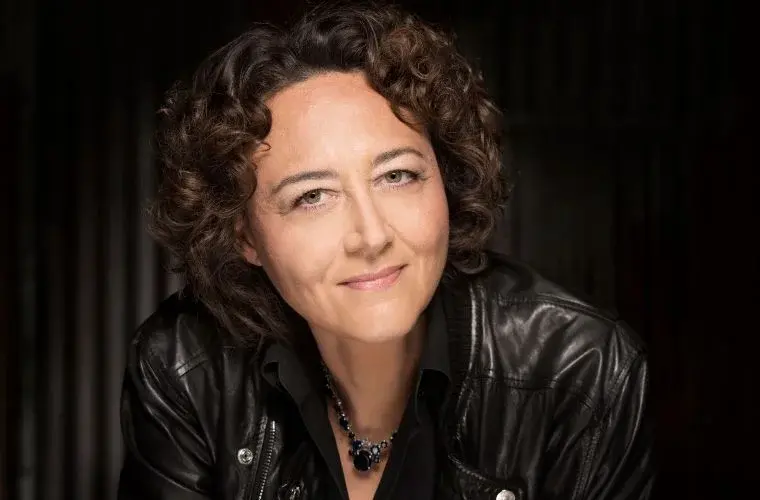
J.S. Bach-Concerto in D minor for two violins*; Cantata #56**; Beethoven-SYMPHONY #9 in D minor, "Choral"^: Christina Nilsson^, Rhianna Cockrell^, Siyabonga Maqunogo^, Leon Kosavic**^/Atlanta Symphony Chorus**^/Atlanta Symphony Orchestra/Nathalie Stutzmann, cond.; November 15, 2025
Since Nathalie Stutzmann's contract as music director of the Atlanta Symphony Orchestra was recently extended through 2029, last weekend seemed like an opportune time to get the meaure of the maestra. However, the Bach/Beethoven program left one scratching one's head. As a singer, Stutzmann never rang my bell. As a conductor, she is a puzzlement.
Sooner or later, any conductor of repute must measure themselves against "The Ninth," Ludwig van Beethoven's epic symphonic summing-up. Although last night's performance was not Stutzmann's first go-round with the D minor symphony, she seemed to have accrued little or nothing to say about it. It was by far the most perfunctory Ninth of my experience and I could not help wondering why Stutzmann bothered with this symphonic summit, were it not an obligatory part of the orchestra's equally obligatory "Beethoven Experience."

To accentuate the positive, Atlanta's Symphony Hall is a splendid venue for making music. Its acoustics are pinpoint-clear, as was the ASO's transparent sonority. Niceties of instrumental commentary and counterpoint were readily legible, without ever one have a sense of a bloodless dissection. The ASO itself is in splendid estate, so Stutzmann's bonafides as an orchestral technician appear to be in order. Likewise, the Atlanta Symphony Chorus makes a fine, distinctive sound: round and pleasing, with great power when needed and a marvelous blend always.
The evening's vocal soloists were clearly chosen with care. The Ninth does not give its soprano and mezzo-soprano extensive exposure, but what was heard from Christina Nilsson and Rhianna Cockrell was impressive indeed. Siyabonga Maqunogo sang Beethoven's beer-hall number with surprising sweetness. And Leon Kosavic merited the extended exposure he received in Bach's Cantata #56 ("Ich will den Kreuzstab gerne tragen") with splendid variety of dynamics, verbal sensitivity and mind-boggling breath control.
Stutzmann can no longer be deferred. The hesitant, surreptitious opening of the Beethoven, with its famous parallel fifths, was likened by conductor Carlo Maria Giulini to the first words of the Book of Genesis, with the forte eruption being akin to "Let there be light." None of that here. It was just loud and casual, even when Beethoven meant it to be soft. Stutzmann's intent, in the exposition and elsewhere, seemed no more ambitious than to blandly state the notes and rhythms. The music, as played, conveyed no expressive force or imagistic power. It was just so much busywork, which rarely fell below a hearty mezzo-forte. Not even periodic jolts of energy from timpanist Michael Shubbart seemed to help.
Excessive conductorial intervention with a work of this stature is normally to be deplored but when confronted with such a poker-faced rendition—a forced march through The Ninth—almost any waywardness would have been welcome. Stutzmann did begin the Adagio with exceptional slowness, verging on stasis. The effect was marmoreal and the cantabile of the movement did not sing. The conductor was more assertive in the finale, pulling about the tempi at times to such an extent that an attempt at Grand Rhetoric seemed to be in progress. A coherent statement of the Ninth it was not.
Since Stutzmann was cheered to the echo at the concert's end, one felt very much in the minority. But one also felt like somebody has put over a fast one on the ASO. This kind of drive-by musicmaking is to be deplored. In the face of a hard-sell PR juggernaut, recordings, and the sponsorship of Philadelphia Orchestra/Metropolitan Opera music director Yannick-Nézét-Seguin (who has promoted Stutzmann relentlessly), strictures are going to have a tough time being heard.

To complicate matters further, the evening's program was imaginatively chosen and the two Bach works were quite commendably done. Concertmaster David Coucheron and Associate Concertmaster Lauren Roth were stylish soloists in the D minor concerto, handing its Italianate phrases back and forth seamlessly. The ASO strings, as led by Stutzmann, have a chocolate but not murky hue and the conductor kept both concerto and cantata moving along at a fair clip, with instrumental variety kept to the fore. Except for a sentimental ritard at the end of the concerto's Largo movement, Stutzmann's renditions were idiomatic indeed, and the uncredited oboe soloist in the cantata was outstanding.
I'll be back for more later in the ASO season. But if Stutzmann could not summon much more than ennui for Beethoven's Ninth, what hope have we for Mahler's "Resurrection" Symphony, which looms at season's end?
Before leaving the subject of "The Ninth," allow me to praise and recommend Carl Schuricht's Decca recording (now on Testament), made in Paris of all unlikely places. If I were taking one Ninth to the proverbial desert island, this would probably be it ... or Jascha Horenstein's (on Pristine), from which learned the symphony. Schuricht gets idiomatic, characterful playing from a wayward Parisian band, the soloists are a marvelous quartet and Gottlob Frick is the blackest of basses. Please avoid any of Sir Georg Solti's several recordings. They are, as Harris Goldsmith once wrote, "for those who want a sonic blast in place of music." Amen!


Comments