Tokenism at the Symphony
- dmckee70
- May 21, 2025
- 4 min read
Walker-FOLKSONGS FOR ORCHESTRA; Dvorak-VIOLIN CONCERTO in A minor*; Smetana-MA VLAST: Tabor; Janacek-SINFONIETTA: James Ehnes*/Minnesota Orchestra/Edward Gardner, cond.; May 16, 2025

Having attended Minnesota Orchestra concerts for the better part of 20 years (1979-1999), I could say I was spoiled rotten during that generation and that a flying visit to Minneapolis/St. Paul was sort of 'old home week.' Those two decades coincided with the entirety of the Sir Neville Marriner and Edo de Waart directorships and a goodly chunk of the brief Eiji Oue tenure. The orchestra waxed and waned somewhat during those years, particularly under Oue, but Twin Cities denizens like myself were blessed to have a pair of top-flight ensembles at their disposal: not only the erstwhile Minneapolis Symphony but its younger sibling, the St. Paul Chamber Orchestra.
Having missed the entirety of the Osmo Vanska regime (save for a pair of pops concerts), I was more than curious as to how the old band was holding up under new music director Thomas Søndergård. Admittedly, I just missed him by a week and encountered guest maestro Edward Gardner instead, but the Orchestra can be confidently said to be in fine estate.

Although Gardner had been slated to lead an all-Czech program (or so the official Web site led one to believe when our tickets were purchased), a late-inning change brought a non-Czech contribution from the U.S.'s own George Theophilus Walker (1922-2018). Unfortunately, the addition was not due to the (considerable) merits of Walker's 1992 Folksongs for Orchestra. Instead, the penny dropped when one stumbled onto a page of institutional self-flagellation: Playing Walker's fine music (and the wretched compositions of Florence Price) are evidently "important steps on the Minnesota Orchestra’s path to reduce its reliance on and reproduction of white privilege."
Oy vey! And you thought the arts were a meritocracy. At least concertgoers were spared a "land statement" (don't ask) of the sort that routinely precedes a performance at one of the Twin Cities' many theaters. These sorts of mea culpa flourishes are the new means of assuaging white-liberal guilt, without the inconvenience of actually having to do anything substantive. In this case, an excellent composer like Walker was demeaned by being the token anti-racism gesture of the evening. Out of one ghetto, into another. (I strongly appreciate that non-white and non-male composers aren't being shunted off into specialty programs but could do without the institutional posturing.)

Too bad, for Folksongs for Orchestra is a good, meaty, too-brief work, high in both art and craftsmanship. Although four spirituals are quoted in the course of its quartet of linked movements, they're never blatantly so and Walker's idiom isn't overtly "folkish." This is definitely several cuts above the crude assemblage of William Dawson's Negro Folk Symphony, that Sirius XM mainstay. (Then again, anything would sound crude when conducted by Yannick Nézét-Seguin.) Walker's 12-minute opus even outdoes the sophistication of William Grant Still's Afro-American Symphony, which was heard to good effect—and without benefit of special pleading—on the Augusta Symphony's season finale. (Still's operas are unaccountably neglected today.)
Walker was a melodist on the Copland-Bernstein axis, yet his idiom is more advanced, much more angular than theirs. Folksongs even indulges in some flirtation with microtonality. First impressions can be fleeting but I'd love to hear more (and lengthier) examples of the Walker canon. If our symphonic ensembles can find room for the ineptitude of Price or the sub-Sibelian stylings of Dawson, then surely there's a place for the altogether-more-professional work of Walker. Gardner and the band played his music with aplomb.
Since Walker's piece was covertly folkish in character, it jibed well with a trio of similarly influenced pieces by Bohemian composers. Dvorak's violin concerto was the featured work, although neither Gardner's heavy-footed accompaniment nor the spread tones of guest violinist James Ehnes made the best case for the piece. The finale, which begs to dance, was particularly unsmiling and almost maladroit. Ehnes was applauded to the extent of offering two encores, both of which found him sounding much more focused of tone than in the Dvorak. The virtuoso antics of Eugene Ysaye's Third Violin Sonata impressed in the manner intended, while an uncredited Bach solo was even finer still, beautifully poised and inflected.
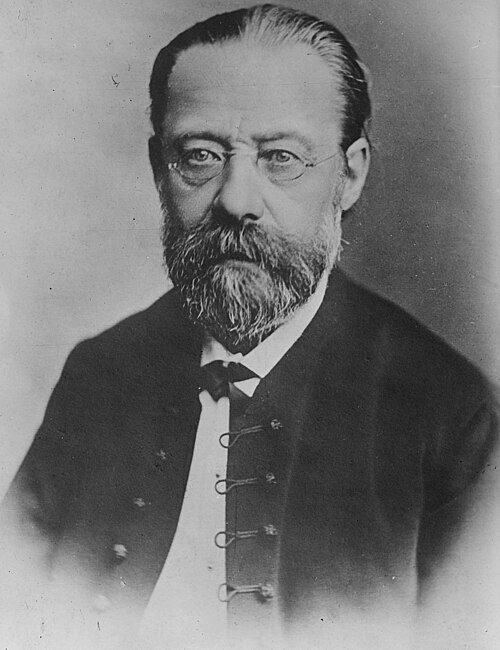
The Minnesota Orchestra has, in the past 45 years, never undertaken a complete Ma Vlast. This unforgivable omission was partly rectified by the performance of the penultimate movement, "Tabor." The Minnesotans played like demons, with the strings showing their mettle in the piece's aggressive cut-and-thrust melodic language. Gardner and the Orchestra left one wanting more Bedrich Smetana, especially when performed so impressively as this.
Enter nine supplementary trumpeters and it was on to Leos Janacek's Sinfonietta. Gardner favors a more blended and plushly carpeted sonority in this piece than we are perhaps accustomed. (The spikier performances of Sir Charles Mackerras have had a salutary effect on how we hear Janacek.) Still, the skirling of the winds and raspy snarls of the brass maintained a certain peasant grittiness within the music, and Janacek's distinctive voice was never misrepresented. The extra trumpeters could have used more practice, frankly. Not so the Orchestra's own regular trumpet section, which played with impressive unanimity of purpose and sound. The evening ended, as intended, in a blaze of triumph, cueing the umpteenth standing ovation of the night (an Upper Midwest example of politesse).
I certainly hope it's not two decades before my next sojourn in lovingly refurbished Orchestra Hall, possessor of one of the best acoustic spaces in North America. One hopes to see Gardner on the Minneapolis podium again soon, too. Next season promises a number of meaty and unhackneyed programs (including what appears to be the continuation of a complete traversal of the Shostakovich symphonies—I just missed the Eleventh by a week). Let's hope for more such enterprise ... and less breast-beating.


Comments